Evaluating Winter Season Outline Icons for Design Projects
Vector icon sets have become a cornerstone of modern digital design. Among the seasonal collections available, Winter Season Outline Icons offers a focused set of 18 line-style illustrations built around cold-weather themes. This collection is packaged for cross-platform use, making it a candidate for mobile interfaces, presentations, web layouts, print materials, and infographics. Understanding what this set delivers—and where it may or may not align with project requirements—helps designers make an informed selection rather than accumulating underused resources.
What the Set Includes and How It Is Structured
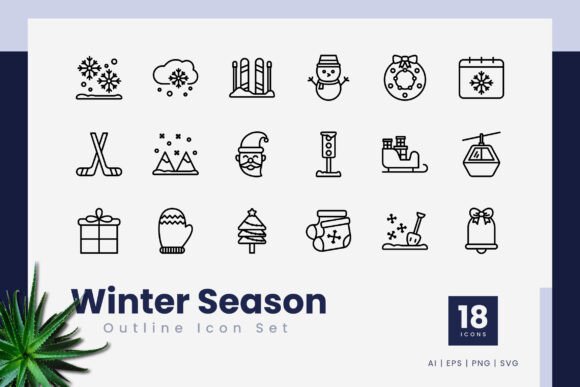
The Winter Season Outline Icons collection consists of 18 distinct icons, each rendered as a stroke-based outline illustration. The term "100 vector" indicates fully scalable artwork that retains clarity at any size without pixelation. The editable stroke lines allow designers to adjust thickness, recolor paths, or modify anchor points inside vector editing software such as Adobe Illustrator or CorelDraw.
File delivery spans multiple formats intended to reduce friction during integration. The package includes .ai and .eps files for professional vector workflows, .svg files for web and responsive design, and transparent .png versions for quick placement in raster-based software. A readme.txt provides licensing or usage notes. The mockup preview shown in promotional materials is not included, a detail worth noting for those expecting presentation-ready display templates.
The icons depict recognizable winter objects and symbols. While the exact imagery varies by interpretation, common winter icon sets typically include snowflakes, mittens, hot beverages, evergreen elements, scarves, snowfall, and seasonal activity markers. The outline style lends a light, airy aesthetic that integrates well with minimalist interface designs and contemporary branding trends that favor line art over solid fills.
Why Designers Consider Seasonal Icon Collections
Seasonal design assets fill a specific gap. A general-purpose icon library may lack winter-specific imagery, forcing designers to adapt unrelated icons or source individual files from disparate locations. A coherent set like Winter Season Outline Icons solves this by providing visual consistency across all 18 glyphs—same stroke weight, stylistic treatment, and proportional scaling. This internal harmony reduces manual adjustment time when multiple icons appear together in a single project.
Another motivation involves brand and marketing calendar demands. E-commerce platforms, newsletters, event promotions, and social media campaigns often rotate visual language with the seasons. Having a ready-made icon family allows teams to build winter-themed landing pages, sale banners, or app onboarding screens without commissioning custom illustrations or spending hours assembling a cohesive look.
The editable nature of the files also appeals to those who need to tailor icons to brand color palettes. Outline icons typically support quick color swaps because the artwork relies on strokes rather than complex fills. A designer can open the .ai file, select all, and apply a brand's hex code in seconds, maintaining visual identity while accessing seasonal imagery.
Evaluating Quality, Scalability, and Editing Flexibility
Vector-based icons shine where scalability matters. Mobile app icons, responsive web graphics, and large-format print all demand artwork that does not degrade. Because Winter Season Outline Icons uses 100% vector construction, scaling from a 16x16 pixel favicon context to a billboard-sized graphic happens without quality loss. This scalability protects the initial investment as project requirements evolve.
The editable stroke feature carries practical weight. Many vector icon sets merge shapes or outline strokes into filled paths, making stroke-width adjustments tedious. When strokes remain editable, designers can thin or thicken lines to match existing UI conventions or accessibility contrast standards. This level of control reduces the likelihood of purchasing icons that only partially fit the intended design system.
Drag-and-drop ease comes from the transparent PNG versions. For quick wireframes, social media graphics, or presentation slides built in software without strong vector support—like PowerPoint or Canva—PNG files sidestep import issues. However, raster PNGs lack the infinite scalability of vector files, a tradeoff designers should factor in when choosing which format to use for final output. The inclusion of SVG files bridges this gap for web use, offering vector precision alongside broad browser and tool support.
Practical Benefits for Different Workflows
For UI and UX designers working on mobile apps, the 18-icon count provides enough variety to build a winter-themed feature without overwhelming the asset library. A weather app might use five or six relevant icons, while a seasonal event app might use most of the set across multiple screens. The consistent line weight helps maintain a unified look across navigation bars, category markers, and decorative elements.
Print designers benefit from the .eps and .ai formats, which integrate into professional layout software such as Adobe InDesign. Greeting card designs, event invitations, packaging, and seasonal catalogs can all incorporate vector artwork without worrying about resolution. The outline style also prints cleanly on various substrates, avoiding heavy ink coverage that solid-filled icons might produce.
Infographic creators gain value from having a pre-coordinated set. When building data visualizations about winter tourism, energy usage, or holiday retail trends, adding thematic icons to chart labels or section headers strengthens visual storytelling. Because all 18 icons match stylistically, the infographic appears designed rather than cobbled together from mismatched sources.
Situations Where This Icon Set Aligns Well
Winter Season Outline Icons fits projects that need a moderate number of winter visuals without requiring deep customization. A freelance designer building a holiday campaign for a small business client would find the set practical: enough variety to cover standard seasonal symbols, editable to match brand colors, and delivered in formats that work across web and print deliverables.
It also suits teams with tight deadlines. Rather than illustrating winter icons from scratch or negotiating usage rights for individual stock images, downloading a commercially licensed set and making minor adjustments saves hours. The drag-and-drop PNG format accelerates mockup creation, social media posting, and presentation assembly where vector precision is nice but not critical.
Design systems that already use outline-style icons benefit from adding season-specific entries that match existing conventions. If a product interface consistently employs 2px stroke icons with rounded caps, the editable strokes in this collection allow harmonization with the established design language—a notable advantage over pre-filled, uneditable alternatives.
When Alternatives May Be Worth Considering
A set containing 18 icons may fall short for projects requiring extensive winter iconography. An interactive holiday app with dozens of distinct winter activities, foods, and objects would quickly exhaust the variety this collection provides. Designers in such situations might look toward larger seasonal bundles or comprehensive icon libraries that include winter subsets among hundreds of other categories. Combining this set with others risks stylistic mismatch, potentially negating the coherence advantage.
Projects demanding highly specific regional or cultural winter imagery may also need alternatives. Generic winter icons might not capture local traditions, sports, or seasonal symbols unique to a target audience. Custom illustration or region-specific stock iconography could serve better despite requiring more time or budget.
If animation is a core requirement, the static outline format may limit options. While SVG files can be animated with CSS or JavaScript, the icon set does not appear to provide pre-built animated versions or After Effects templates. Designers prioritizing motion might investigate animated icon libraries or budget time to animate these static assets from scratch.
The absence of a mockup preview in the delivered files merits consideration. Designers accustomed to receiving presentation-ready scene mockups alongside icon purchases will need to create their own context for client presentations. This is not inherently negative—many professionals prefer using their own mockup frameworks—but it shifts the expected workload slightly.
Decision-Making Considerations for Buyers
Assessing whether Winter Season Outline Icons aligns with project goals starts with an inventory of actual needs. Counting how many winter icons a project genuinely requires clarifies whether 18 is ample or insufficient. Checking existing design system documentation for stroke conventions, color palettes, and stylistic treatments reveals whether the editable strokes in this set offer enough customization to blend seamlessly.
File format requirements should guide the evaluation. A web-only project may prioritize SVG quality and file size; a print-focused workflow leans on .eps and .ai reliability; a mixed-media campaign benefits from having all formats available. The inclusion of transparent PNGs adds versatility for quick placements where vector software is not part of the pipeline.
Licensing terms, typically outlined in the readme.txt, warrant a thorough review before purchase. Confirming commercial usage rights, redistribution limitations, and attribution requirements prevents legal complications after integration. Most icon sets sold through reputable marketplaces offer standard commercial licenses, but verifying specifics protects both the designer and the end client.
Budget context also matters. If a project needs only a handful of winter icons and the set's price exceeds the per-icon value threshold, exploring pay-per-icon marketplaces or free open-source alternatives like Feather Icons or Material Design icons—which occasionally include seasonal symbols—might make more financial sense. The tradeoff often lies in stylistic cohesion and the time required to locate and standardize disparate free icons versus purchasing a ready-made matched set.
Weighing the Long-Term Value
A seasonal icon collection represents a recurring asset. Winter campaigns happen annually, and owning a coherent set eliminates the need to source new icons each year. Designers who serve multiple clients in seasonal industries—hospitality, retail, event planning—can amortize the initial cost across many projects. The vector, editable nature ensures the files remain usable as design tools and trends evolve. Line-style icons, in particular, have shown longevity as a UI and branding staple rather than a fleeting trend.
However, value depends on actual use. Icon sets purchased and rarely opened provide little return. Before acquiring Winter Season Outline Icons, mapping it against upcoming project calendars helps gauge whether demand exists. A designer with no winter-themed projects in the pipeline might delay acquisition until a concrete need arises, avoiding digital asset clutter.
The high-quality claim associated with this set suggests professional-grade construction—clean nodes, consistent spacing, and proper file organization. These attributes matter in collaborative environments where multiple designers may open and edit the files. Poorly constructed vectors with excessive anchor points or inconsistent stroke profiles create friction and rework, eroding the time savings a pre-made set promises. Testing a sample file when possible provides assurance of build quality before committing.
Ultimately, Winter Season Outline Icons serves as a practical resource for designers who need a modest, cohesive, and editable collection of winter-themed line icons. Its strength lies in format versatility, stroke editing capability, and stylistic consistency across a curated set of 18 icons. Projects with moderate winter icon needs, outline-style design systems, and multi-format delivery requirements stand to benefit most. Larger or highly specialized projects, animated workflows, or those with tight per-asset budgets may find that alternative solutions better match their constraints. The decision comes down to aligning the icon set's specific attributes with the genuine, measured requirements of the work at hand.